Gaming · 2026
Starlane — a persistent-universe space game
- What it is
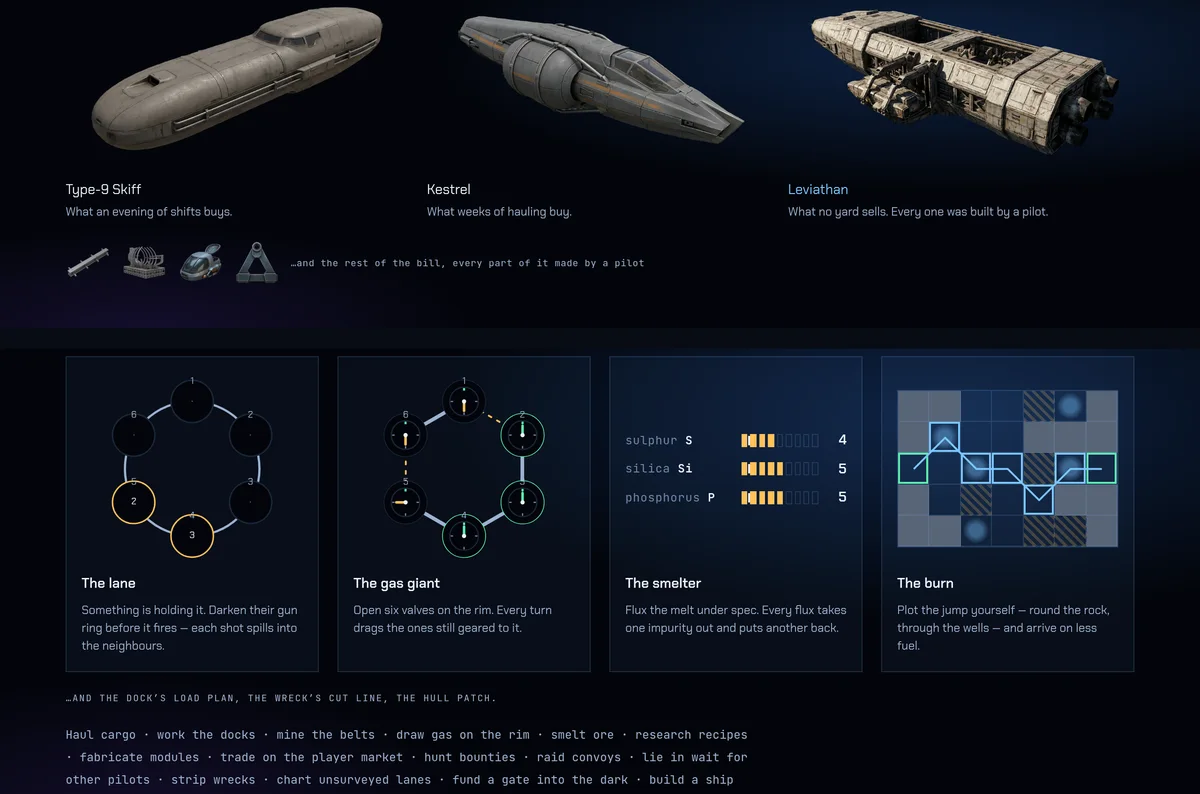
A space game you play in a browser tab, in the time you actually have. You start with no ship and an empty chart — the dockmaster fronts you your first hull, and the map fills in one lane at a time, with nobody publishing how many systems there are. Nothing is made until somebody researches the recipe for it, and the larger ships are laid down by players out of what they have mined and refined; most jobs can also be hand-played as a small puzzle for a faster or cheaper result, though none of that is required and none of it is for sale. One universe that keeps going whether you are there or not, no seasons and no wipes, and the pilots decide what gets built next — file an idea on a board inside the game and you are paid in credits when it ships. Free to play, with no client to install and nothing to buy.
- Stack
- Python
- Quart
- PostgreSQL
- Next.js
- TypeScript
- Kubernetes (AKS)
Yours would not look like this one.
This is my own; most of what I do is someone else’s and stays private. Tell me what you are working on and I will tell you whether it is a good fit.